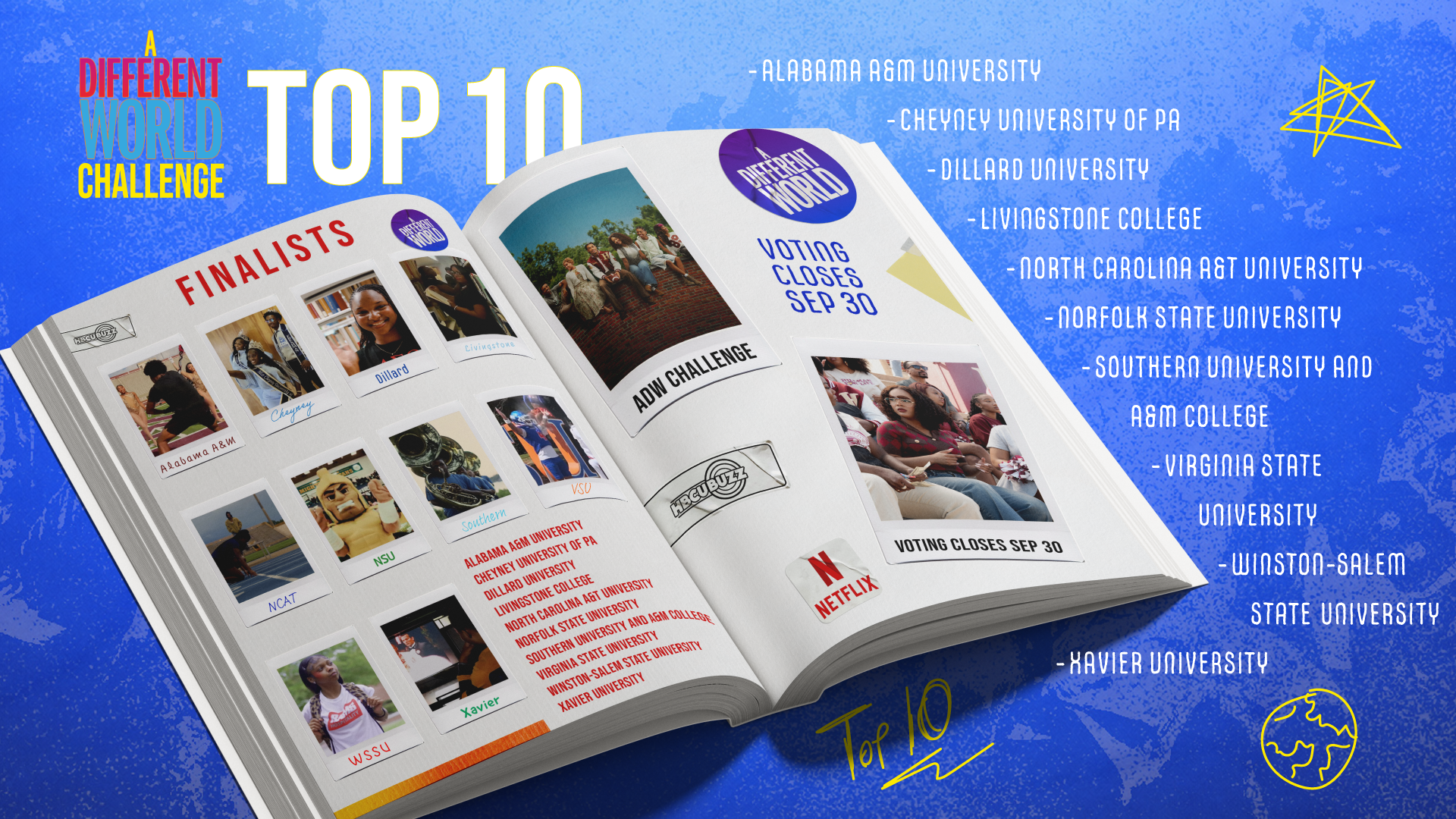
The A Different World Challenge has reached its finalist stage, with the Top 10 student teams representing ten HBCUs. The teams reimagined the show’s opening sequence through the friendships, traditions, and everyday experiences that make their campuses special.
The challenge places student creativity and campus identity at the center of the competition. Each finalist team offers its own interpretation of the opening sequence, drawing on the experiences that shape life at its HBCU. The summary does not identify the ten institutions or provide additional details about the individual teams, so the focus remains on the collective representation of ten campuses.
The invitation to vote is part of the challenge’s next step. Readers who want to support a finalist should look for the voting option associated with the A Different World Challenge and cast a ballot there. The supplied information announces that voting is open but does not include a voting URL, deadline, or further instructions.
For the finalists, the challenge provides a public platform for presenting how their campuses are experienced by the students who know them best. Their entries connect a familiar television opening sequence with the friendships, traditions, and daily experiences that make each participating HBCU special.
The Top 10 designation also gives readers a chance to see how ten student teams interpret the same creative prompt through distinct campus perspectives. Without additional information about the entries, the source does not rank one approach above another or identify a current leader.
As voting continues, attention will remain on the finalist teams and the campus stories represented through their reimagined sequences. Readers can follow the challenge’s voting process and decide which finalist they want to support.
Why this matters: The challenge highlights HBCU student creativity and gives campus communities a way to share their friendships, traditions, and everyday experiences. By representing ten HBCUs, the finalist teams bring their campus identities into a broader conversation and invite readers to engage through voting.