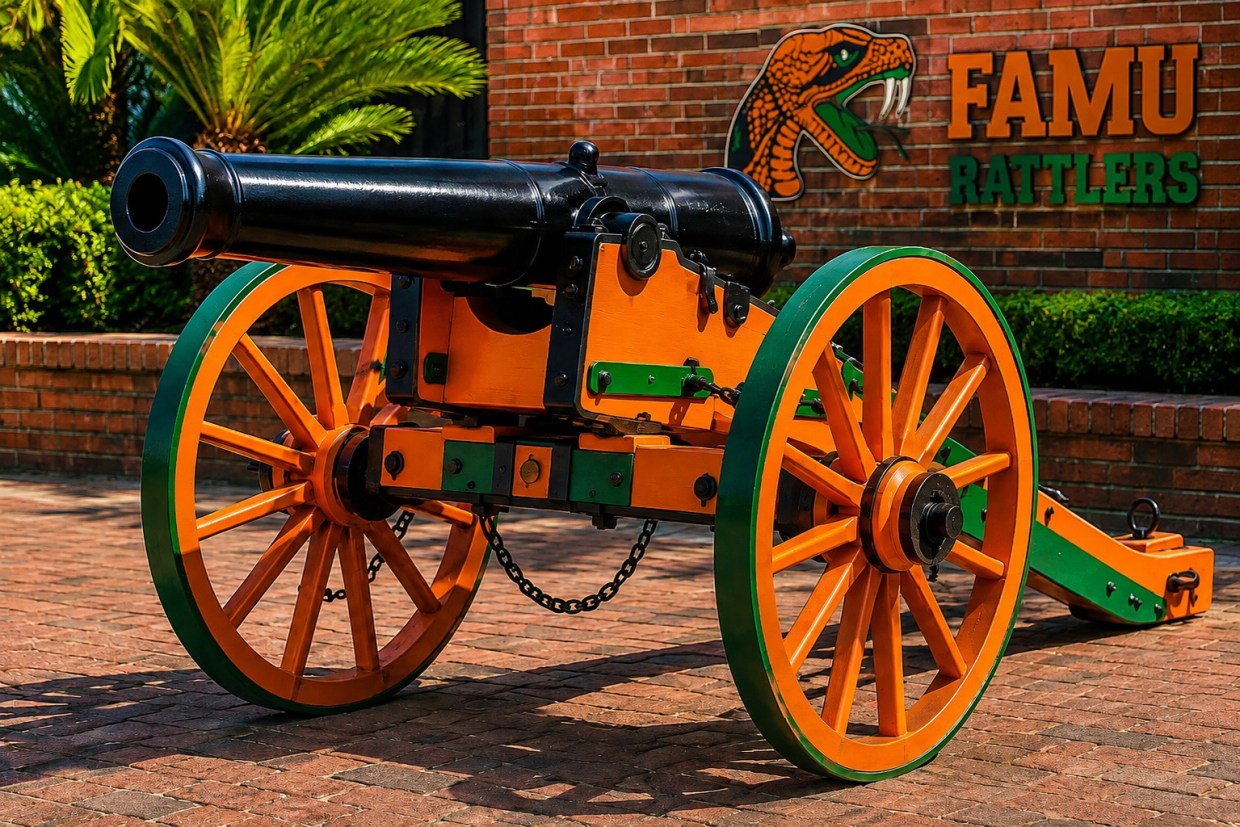
Florida A&M University's touchdown cannon is back. The beloved fixture of Rattlers football has made its return to the arsenal of traditions that define game days at the Tallahassee institution, marking a restoration of one of FAMU's most recognizable athletic symbols.
The cannon represents far more than a piece of equipment or a novelty feature at football games. For FAMU, it embodies the energy, pride, and pageantry that have long characterized the Rattlers' athletic culture. Game-day traditions at HBCUs carry deep institutional meaning—they connect students, alumni, and fans to the university's identity and create moments of collective celebration that extend far beyond the final score.
FAMU, one of the nation's premier historically Black universities, has a storied athletic tradition rooted in excellence and community pride. The return of the touchdown cannon signals the university's commitment to preserving and celebrating the distinctive elements that make Rattlers football a unique experience. These traditions serve as touchstones for generations of students and alumni, creating continuity between past and present while building anticipation for future seasons.
The cannon's comeback also reflects broader conversations within HBCU athletics about honoring institutional heritage while moving forward. Many HBCUs have worked to restore or enhance game-day experiences in recent years, recognizing that these moments matter to recruitment, retention, and the overall student experience. When a tradition like FAMU's touchdown cannon returns, it sends a message to the campus community and prospective students about what the university values.
For current Rattlers players and coaches, the restoration of this tradition provides a tangible connection to FAMU's athletic legacy. Game-day rituals and symbols can energize teams and create an atmosphere that reflects institutional pride. The cannon's return to action for the 2026 season gives the football program another tool to build momentum and celebrate success on the field.
The timing of the cannon's return also matters. As FAMU continues to strengthen its athletic programs and campus infrastructure, decisions about which traditions to restore and celebrate send signals about institutional priorities. The investment in bringing back this iconic symbol demonstrates that the university recognizes the value of game-day culture and the role it plays in the broader student experience.
Why this matters: HBCU traditions are not mere pageantry—they are expressions of institutional identity and community belonging. When Florida A&M restores its touchdown cannon, it affirms that these symbols matter to the university's mission and to the students who call FAMU home. For prospective students considering HBCUs, these traditions often represent the distinctive culture and pride that set historically Black universities apart. The cannon's return reminds us that HBCUs invest in creating memorable, meaningful experiences that extend well beyond the classroom and the football field.