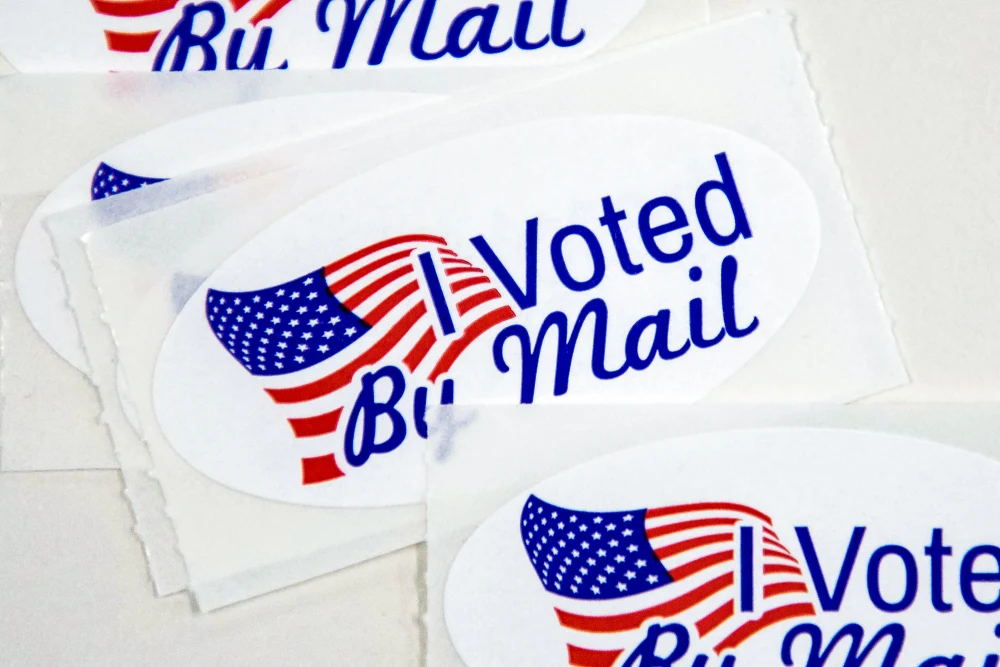
A federal judge has blocked a Postal Service regulation that would have given the administration control over mail-in ballots ahead of midterm elections, according to court filings. The decision represents the latest in a series of legal challenges to the administration's approach to voting access and election administration.
The regulation in question would have altered how the Postal Service handles mail-in ballots, a mechanism that millions of Americans rely on to cast their votes. Mail-in voting has become increasingly central to American electoral participation, particularly since the 2020 presidential election expanded its use nationwide. The Postal Service's role in ballot delivery is therefore critical to election administration and voter access.
The federal judge's decision to block the regulation suggests concerns about the scope of executive authority over voting procedures and the Postal Service's traditional independence in mail handling. Courts have increasingly scrutinized regulations that could affect voting access, particularly those that appear to concentrate control over ballot handling in ways that depart from established practice.
This ruling is part of a broader pattern of legal setbacks the administration has faced on voting and election issues. Multiple courts have intervened in disputes over voting access, ballot procedures, and election administration, reflecting the high stakes and legal complexity surrounding how Americans vote. Each ruling adds to a growing body of case law defining the boundaries of executive power in election matters.
The implications extend beyond this single regulation. Election administration involves coordination between federal agencies, state officials, and local election boards. When federal regulations governing mail-in ballots face legal challenges, it can create uncertainty about procedures heading into elections. States and election officials must often wait for final court rulings before implementing new protocols, which can complicate preparation timelines.
For HBCUs and their surrounding communities, voting access remains a persistent concern. Historically Black colleges and universities have long served as civic anchors in their regions, and their students, faculty, and staff depend on reliable voting mechanisms. Mail-in voting has proven particularly valuable for students who may be away from home during elections, for working adults balancing employment and education, and for voters with mobility challenges. Any regulation affecting mail-in ballot handling therefore touches directly on the ability of HBCU communities to participate fully in democratic processes.
Why this matters: Voting access is foundational to democratic participation, and HBCU communities have historically fought for and defended the right to vote. When federal regulations threaten to complicate mail-in voting procedures, they risk disproportionately affecting students and workers who rely on this method. This court ruling protects a voting mechanism that many in the HBCU community depend on, ensuring that barriers to participation do not become embedded in federal policy.