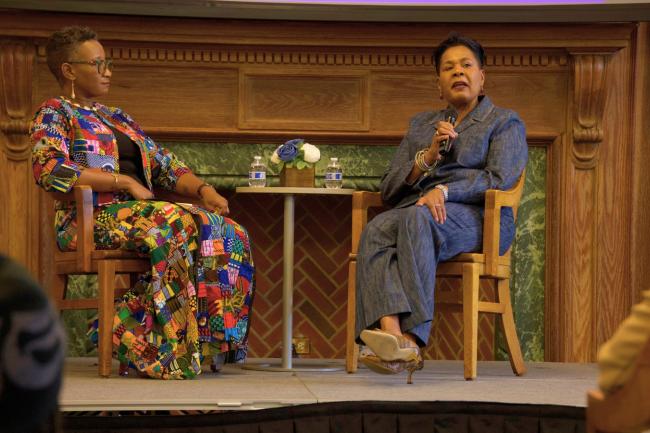
Howard University's Center for Women, Gender, and Global Leadership (CWGGL) hosted Her Excellency Paula-Mae Weekes, former president of the Republic of Trinidad and Tobago, for a special fireside chat centered on global leadership. The event brought together Howard students and faculty to engage directly with a leader whose career spans diplomacy, law, and executive governance in the Caribbean.
Weeks served as president of Trinidad and Tobago, one of the Caribbean's most economically significant nations. Her visit to Howard reflects the university's commitment to connecting students with international leaders and expanding their understanding of global affairs beyond traditional classroom settings. The fireside chat format—an intimate, conversational approach—allowed for direct dialogue between Weekes and the Howard community about the complexities of leadership on the world stage.
The Center for Women, Gender, and Global Leadership, which hosted the event, positions itself at the intersection of gender studies and international relations. By bringing a female head of state to campus, CWGGL underscored the importance of women's leadership in global contexts and provided Howard students with a tangible example of women navigating executive power in the Caribbean region.
Howard University has long served as a convening space for international dialogue and intellectual exchange. The university's location in Washington, D.C., and its historical role as an HBCU have made it a natural hub for conversations about global affairs, diplomacy, and leadership development. Events like this fireside chat continue that tradition, offering students exposure to leaders whose experiences and perspectives shape international policy and regional development.
The visit also reflects broader patterns of Caribbean-American intellectual and diplomatic engagement. Trinidad and Tobago, as a multicultural, multiethnic nation with significant economic and geopolitical importance in the Western Hemisphere, represents a crucial context for understanding contemporary global leadership challenges. Weekes's presence at Howard created an opportunity for students to learn directly about Caribbean governance, gender dynamics in executive leadership, and the particular pressures facing leaders of small island developing states.
For Howard students pursuing careers in international relations, diplomacy, law, or public service, encounters with sitting and former heads of state provide invaluable perspective. Such engagements help students understand the real-world application of their studies and the pathways through which HBCU graduates contribute to global affairs.
Why this matters: Howard University's role as a premier HBCU includes preparing students for leadership roles not just in the United States but on the global stage. By hosting international leaders like former President Weekes, the university reinforces its commitment to developing globally conscious graduates who understand diverse governance models, gender dynamics in leadership, and the interconnected nature of contemporary policy challenges. These connections strengthen the HBCU's position as a center for international intellectual exchange and underscore the diaspora's ongoing contributions to shaping world affairs.