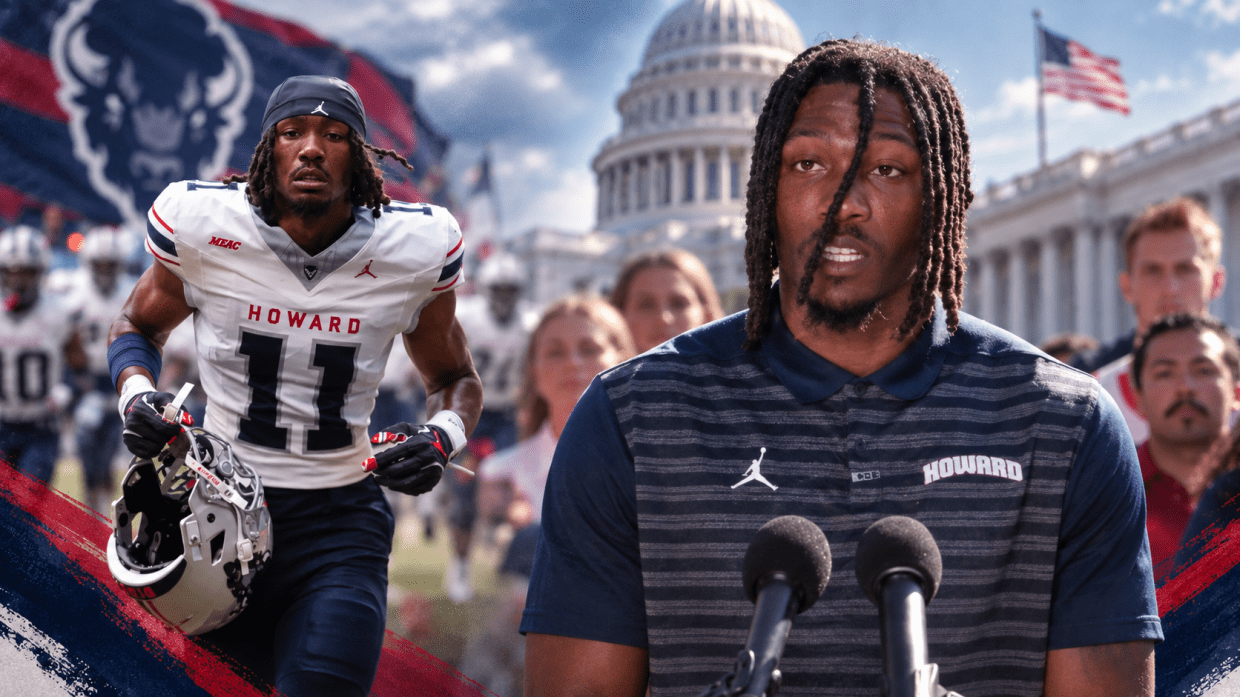
Howard University football player Kedrick Green is urging Congress to pass the Protect College Sports Act, placing an HBCU athlete’s voice at the center of a broader debate over college athlete rights.
The legislation has drawn support from HBCU conferences while also facing opposition from the Congressional Black Caucus and athlete-rights advocates. That divide has made the bill a point of tension as HBCU leaders and athletes navigate competing views about the future of college sports.
Green’s position adds an athlete perspective to the discussion. His call for Congress to pass the measure comes as HBCU conferences back legislation that other influential voices oppose. The summary does not provide additional details about the bill’s provisions or explain the specific reasons behind each side’s position.
The disagreement reflects the complexity of policy debates affecting HBCU athletics. Conferences may support legislation while athlete-rights advocates and members of the Congressional Black Caucus raise objections. For athletes, those competing positions can shape how their rights and participation are discussed in national policy conversations.
Green’s advocacy also underscores that HBCU athletes are not separate from debates about the structure of college sports. Their views are part of the conversation, alongside those of conferences, lawmakers and advocates. In this case, his support for the Protect College Sports Act contrasts with opposition identified in the summary, creating a clear divide over the legislation.
The available information does not indicate whether Congress will pass the bill, identify the provisions Green supports, or describe how the legislation would affect athletes or HBCU programs. Those unanswered questions remain central to understanding the stakes of the debate.
For now, the issue is defined by competing positions: Green is urging passage, HBCU conferences are backing the legislation, and the Congressional Black Caucus and athlete-rights advocates oppose it. That split places HBCU athletics within a national discussion over athlete rights and the direction of college sports.
Why this matters: HBCU athletes and conferences are directly represented in a debate over athlete rights, while the divide among supporters and opponents shows that the legislation carries significance across the HBCU community.