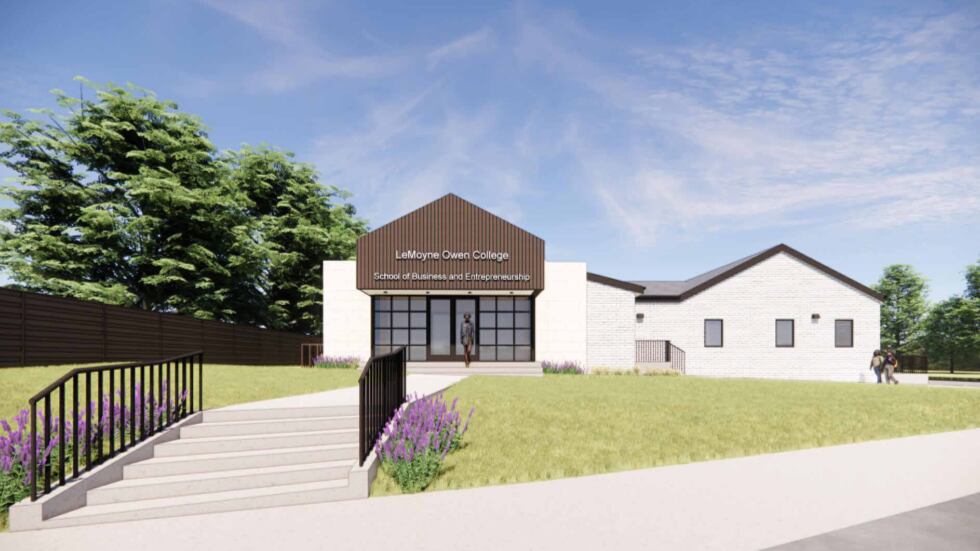
LeMoyne-Owen College, the historically Black university rooted in Memphis's educational landscape, has announced a $1.5 million renovation initiative centered on creating a new dedicated building for its School of Business. The project, documented through permit filings, represents a substantial institutional commitment to strengthening one of the college's core academic divisions.
The renovation plan underscores LeMoyne-Owen's strategic focus on business education at a time when HBCUs across the country are investing in facilities and programs designed to prepare students for competitive professional environments. Business schools have become increasingly central to HBCU missions, serving as pipelines for African American entrepreneurs, corporate leaders, and financial professionals who might otherwise face barriers to entry in predominantly white institutions.
LeMoyne-Owen, which has deep roots in Memphis's historically Black community, has long positioned itself as an engine for economic mobility and professional development. A dedicated School of Business building signals the institution's confidence in the demand for business education and its commitment to providing students with modern, purpose-built learning spaces.
Capital projects of this scale typically involve multiple phases—from design and permitting through construction and equipment installation. The permit filing stage, where LeMoyne-Owen currently stands, is often where institutions lock in timelines and secure necessary approvals from local authorities. The $1.5 million figure suggests a focused renovation rather than a ground-up construction, likely involving modernization of classroom spaces, technology infrastructure, and facilities that support contemporary business curriculum.
For LeMoyne-Owen students, a new School of Business building could mean access to upgraded learning environments, better-equipped labs or simulation spaces, and facilities designed with modern pedagogical approaches in mind. These physical improvements often correlate with enhanced student recruitment and retention, as prospective students increasingly factor campus facilities into their college decisions.
The project also reflects broader trends within the HBCU sector, where institutions are leveraging capital campaigns, donor support, and strategic planning to upgrade aging infrastructure. Many HBCUs were founded in the 19th and early 20th centuries and have faced chronic underfunding relative to their predominantly white peer institutions. Renovation and new construction projects represent both a catch-up effort and a statement of institutional vitality.
Why this matters: LeMoyne-Owen's investment in a dedicated School of Business building sends a clear message to its students, prospective applicants, and the Memphis community that the college is serious about preparing the next generation of Black business leaders and professionals. For HBCUs broadly, such capital projects demonstrate institutional resilience and forward-thinking leadership—essential signals in an increasingly competitive higher education landscape. When Black colleges invest in their physical infrastructure and academic spaces, they invest in the economic futures of their students and the communities they serve.