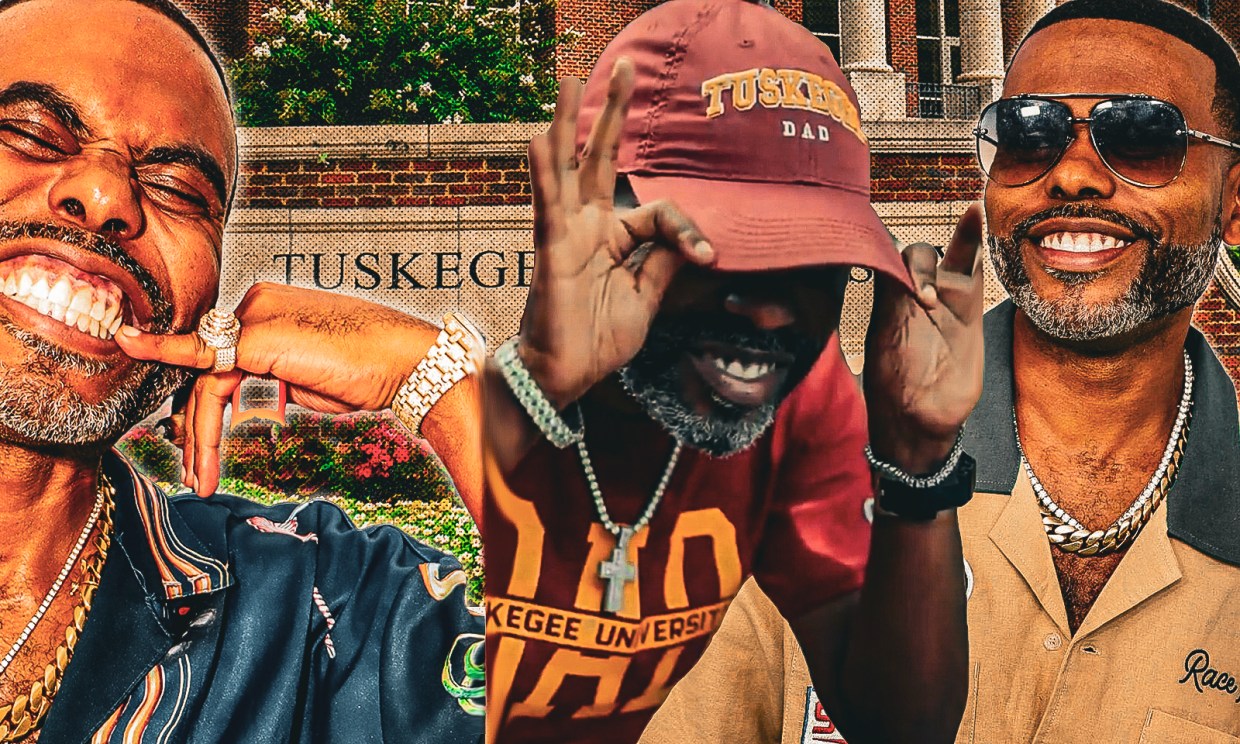
Lil Duval has officially stepped into one of the most celebrated roles in Black culture: the HBCU dad. The comedian marked his daughter's move to Tuskegee University with a celebration that blended parental pride, comedy, and a viral moment—teaching her the Murda Bend dance in the process.
The move-in moment, shared widely on social media, captures something deeply resonant within the HBCU community. Tuskegee University, one of the nation's most historically significant Black institutions, has long been a destination for families seeking an education rooted in excellence and legacy. When a parent shows up not just with boxes and a check, but with genuine enthusiasm and cultural participation, it sends a message: this moment matters, and so does the institution your child is joining.
Lil Duval's approach—combining jokes with the Murda Bend, a dance that has circulated through social media and campus culture—reflects how HBCU traditions and contemporary viral moments often intersect. The yard, that central gathering space at every HBCU, has always been where students learn not just from classrooms but from each other, from culture, and from the living history of Black excellence. A parent who shows up ready to engage with that culture, even playfully, signals that they understand what their child is stepping into.
The comedian's celebration also highlights a broader phenomenon: the visibility and pride surrounding HBCU attendance. For generations, HBCUs have been the backbone of Black professional and intellectual life, producing leaders across every field. Yet in recent years, there has been a renewed cultural emphasis on celebrating HBCU choices—from social media trends to celebrity endorsements to family moments like this one. When public figures like Lil Duval share their HBCU dad moments, they contribute to a cultural narrative that positions these institutions not as fallback options, but as destinations of choice and pride.
Tuskegee's legacy as a land-grant institution with deep roots in agricultural research, engineering, and the sciences makes it a particularly significant choice. The university's history, including its role in training leaders and innovators, carries weight that extends far beyond move-in day. A parent celebrating their child's arrival at such an institution is celebrating not just an educational opportunity, but a connection to a lineage of Black achievement.
The viral nature of Lil Duval's moment also underscores how HBCU culture has become increasingly visible in mainstream spaces. What happens on the yard, in the dorms, and at move-in doesn't stay contained to campus anymore—it circulates, it resonates, and it influences how young people think about their own HBCU choices.
Why this matters: When prominent figures celebrate their children's HBCU moves with genuine enthusiasm and cultural engagement, they reinforce the message that these institutions are worthy of pride and investment. For prospective students and their families, these moments of visibility matter. They show that choosing an HBCU is not just an academic decision—it's a cultural one, a family one, and increasingly, a celebrated one.