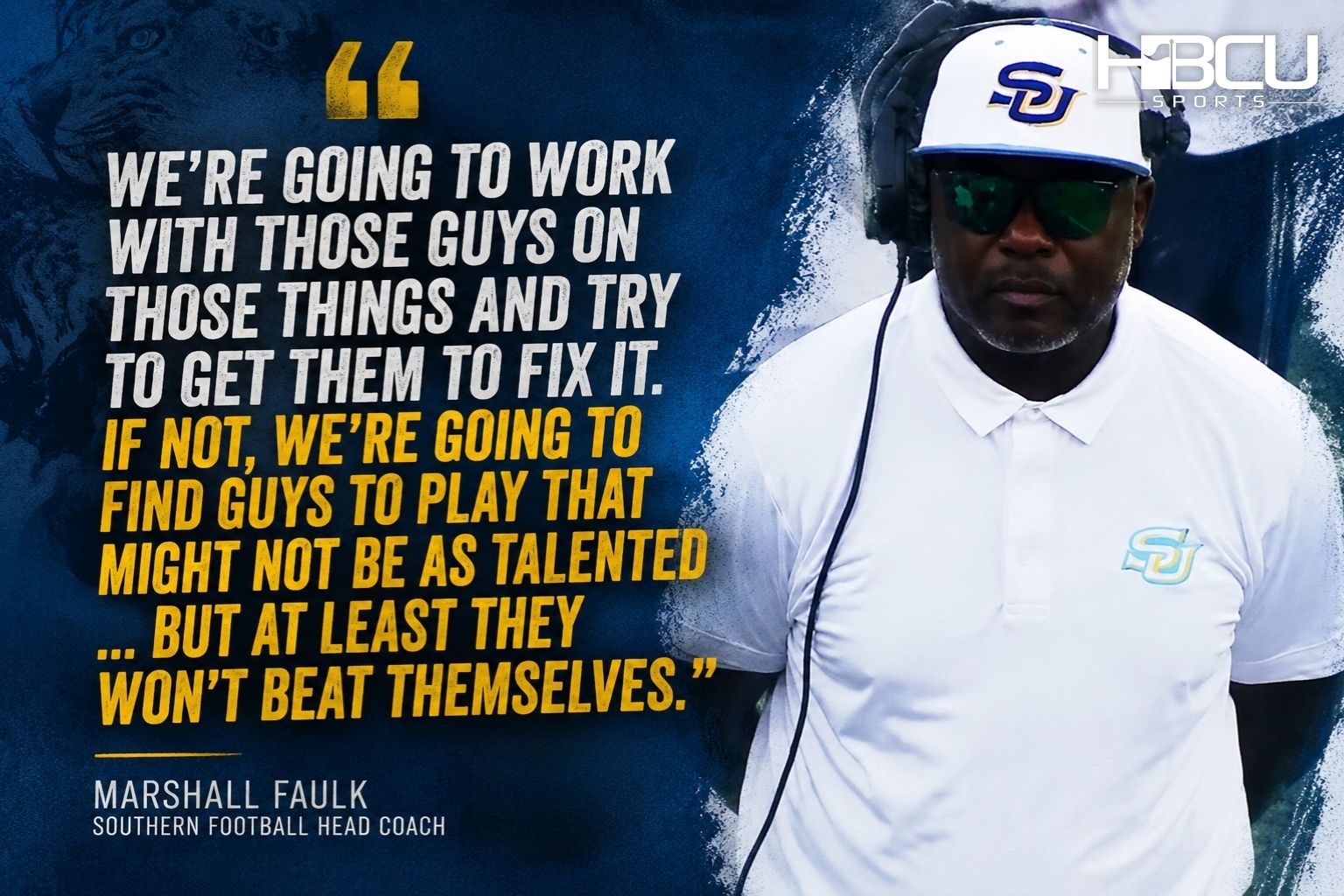
Southern University's 2026 football season opened with disappointment on Saturday, August 29, as the Jaguars fell to Alabama State 30-17. But head coach Marshall Faulk's postgame assessment pointed not to Alabama State's dominance, but to an enemy closer to home: self-inflicted wounds.
In his analysis of the loss, Faulk emphasized a message that resonates throughout competitive football at every level—that teams cannot afford to beat themselves. The implication was clear: Southern had opportunities to compete more effectively, but mistakes within their control undermined their performance. Whether those mistakes manifested as turnovers, penalties, missed assignments, or poor execution in critical moments, Faulk identified them as the primary factor in the defeat rather than a superior opponent.
This kind of coaching message is familiar in the HBCU football landscape, where programs compete fiercely within conferences and against regional rivals. The Southwestern Athletic Conference (SWAC), which includes both Southern and Alabama State, features some of the most competitive historically Black college football in the nation. Opening-day losses, while never welcome, often serve as teaching moments—particularly when a coach can point to specific, correctable issues.
Faulk's focus on controllable factors suggests a team that has the talent and preparation to compete but needs to tighten execution. In the early weeks of a season, such losses can be valuable if they prompt the kind of self-examination and adjustment that prevents similar performances down the road. The Jaguars will have the opportunity to respond in their next contest, carrying forward whatever lessons Faulk and his staff extract from the Alabama State game.
The 30-17 final score indicates a game that remained competitive but ultimately slipped away—the kind of result that stings more when a coach believes his team left points on the field through preventable mistakes. For a program with Southern's tradition and resources, the message from the sideline is typically one of accountability: fix what you can control, and the results will follow.
Why this matters: In HBCU football, where recruiting resources and facilities may not match those of Power Five programs, execution and discipline often determine outcomes. When a coach like Faulk emphasizes controllable mistakes, he's reinforcing a culture of accountability that defines successful HBCU programs. How Southern responds to this early-season setback—whether they eliminate the self-inflicted errors Faulk identified—will shape not just their conference standing but their trajectory throughout the 2026 season. For HBCU fans and the broader community, it's a reminder that these programs compete at a high level, and their success depends on the same fundamentals that matter in any sport: execution, discipline, and refusing to beat yourself.