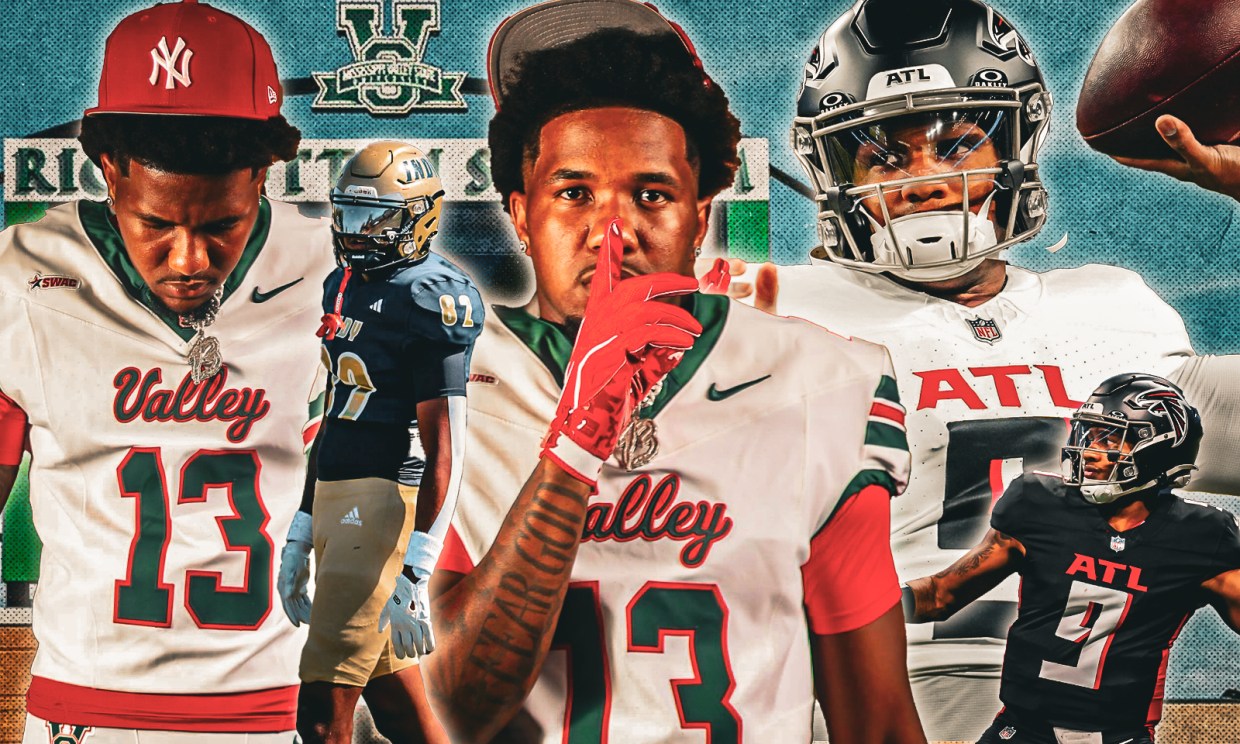
Mekhi Penix has committed to Mississippi Valley State University, bringing elite athletic pedigree to the Delta Devils program. The younger brother of Atlanta Falcons quarterback Michael Penix Jr., Mekhi stands 6-foot-4 and is expected to play receiver for the HBCU squad.
The addition of Penix represents a significant recruitment win for Mississippi Valley State, one of the historically Black universities competing in the Southwestern Athletic Conference. HBCUs have increasingly become destinations for talented athletes seeking meaningful playing time and a strong educational foundation, and the Penix family's connection to professional football adds visibility to the program.
Michael Penix Jr.'s rise to the NFL—including his selection by the Atlanta Falcons—has drawn national attention to his athletic lineage. Now, with his younger brother joining an HBCU, the family's commitment to historically Black institutions underscores the growing recognition of these universities as platforms for athletic development and advancement.
Mississippi Valley State, located in Itta Bena, has a storied football tradition within the HBCU landscape. The program competes at the FCS level and has produced numerous athletes who have gone on to professional careers. The recruitment of a prospect like Mekhi Penix signals the program's ambitions to strengthen its receiving corps and overall offensive capabilities heading into the 2026 season.
For Penix, joining an HBCU offers the opportunity to develop his craft at a program with institutional support and coaching expertise. The 2026 season will be his first with the Delta Devils, and he is positioned to make an immediate impact as a top target in the passing game. His size and athletic profile suggest he could become a focal point of the offense as the program looks to build momentum.
The recruitment also reflects broader trends in college football, where HBCUs are increasingly competitive in attracting talented athletes. Programs like Mississippi Valley State are leveraging their academic missions, community connections, and football traditions to recruit players who might otherwise consider larger programs. The presence of a prospect with Penix's profile and family background can elevate the program's national profile and attract additional talent.
Why this matters: The arrival of Mekhi Penix at Mississippi Valley State demonstrates the continued strength and appeal of HBCU football programs in the competitive landscape of college athletics. When talented athletes and their families choose historically Black universities, it validates the quality of education, coaching, and opportunity these institutions provide. This recruitment also highlights how HBCU programs are building sustainable competitive advantages by attracting skilled players who are committed to both athletic excellence and the HBCU mission. For the broader HBCU community, such commitments reinforce the value and visibility of these institutions on the national stage.