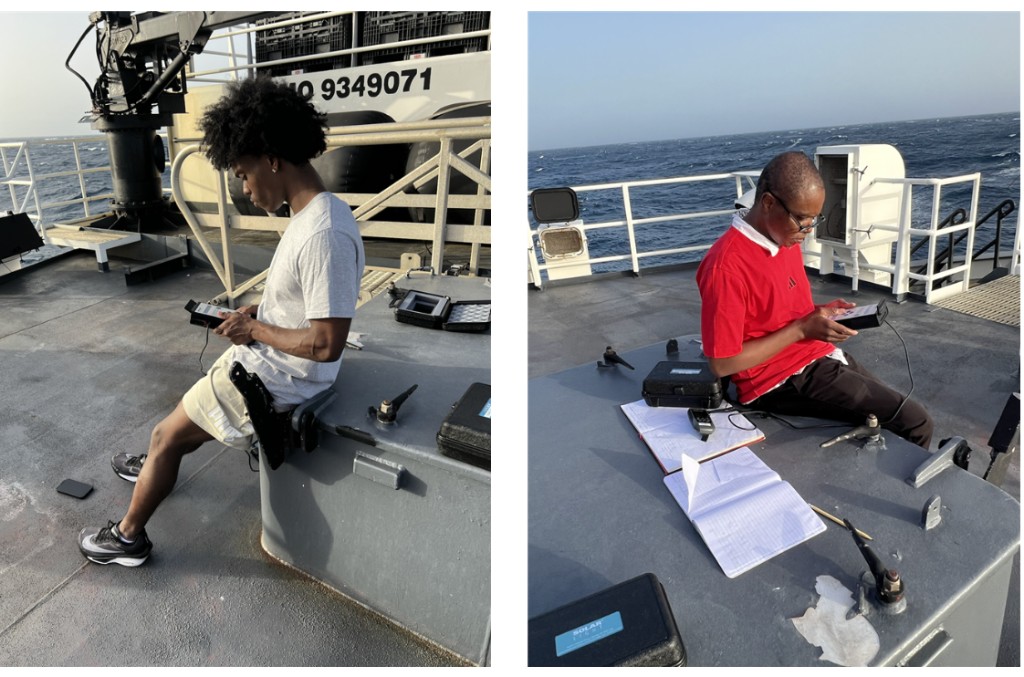
Virginia Union University is extending its research footprint into atmospheric science through an unexpected partnership: Dr. Francis E. Mensah, chair and associate professor of Natural Sciences, and Kingston Blackburn, a Physics and Engineering major and Science Engineering Summer Institute student, are aboard a NOAA research cruise studying Saharan dust transport across the Atlantic Ocean.
The presence of VUU faculty and students on a federal research vessel underscores the university's commitment to hands-on scientific training and real-world research opportunities. Mensah's leadership in the Natural Sciences department positions VUU as an institution capable of contributing to large-scale environmental monitoring efforts. Blackburn's participation as an undergraduate researcher reflects the kind of experiential learning that distinguishes HBCU science programs—students don't just study phenomena in classrooms; they engage directly with the instruments, data, and methodologies that drive discovery.
Saharan dust transport is a significant atmospheric phenomenon with implications for air quality, ocean ecosystems, and climate patterns across the Atlantic basin and beyond. NOAA's research cruises represent some of the most rigorous environmental monitoring conducted in U.S. science. That VUU representatives are aboard speaks to the caliber of work being conducted at the university and the recognition VUU has earned within the broader scientific community.
For HBCUs, participation in federal research initiatives carries particular weight. Historically, Black colleges and universities have had to fight for equitable access to research funding, equipment, and collaborative opportunities. When VUU faculty and students are invited aboard NOAA vessels, it signals that the institution's scientific work meets national standards and that its researchers are trusted partners in critical environmental research.
Blackburn's involvement as a Science Engineering Summer Institute student is especially noteworthy. Summer research institutes at HBCUs serve as pipelines into graduate programs and professional careers in STEM fields. Direct exposure to oceanographic and atmospheric research—conducted at sea, with federal scientists—can reshape a student's trajectory and aspirations. For a Physics and Engineering major, this cruise represents the kind of immersive, high-impact experience that often determines whether students pursue advanced degrees and research careers.
The work also reflects VUU's geographic positioning. Located in Richmond, Virginia, the university sits within reach of the Atlantic coast and the scientific infrastructure that supports marine and atmospheric research. Building partnerships with agencies like NOAA allows VUU to leverage that proximity and contribute meaningfully to national research priorities.
Why this matters: HBCU participation in federally funded research cruises and atmospheric studies strengthens the pipeline of Black scientists entering environmental and climate science fields. When VUU students and faculty conduct research aboard NOAA vessels, they gain credentials, networks, and experience that position them as future leaders in environmental science. This visibility also challenges persistent underrepresentation of HBCUs in high-profile research collaborations and demonstrates that Black institutions are essential partners in understanding and addressing global environmental challenges.