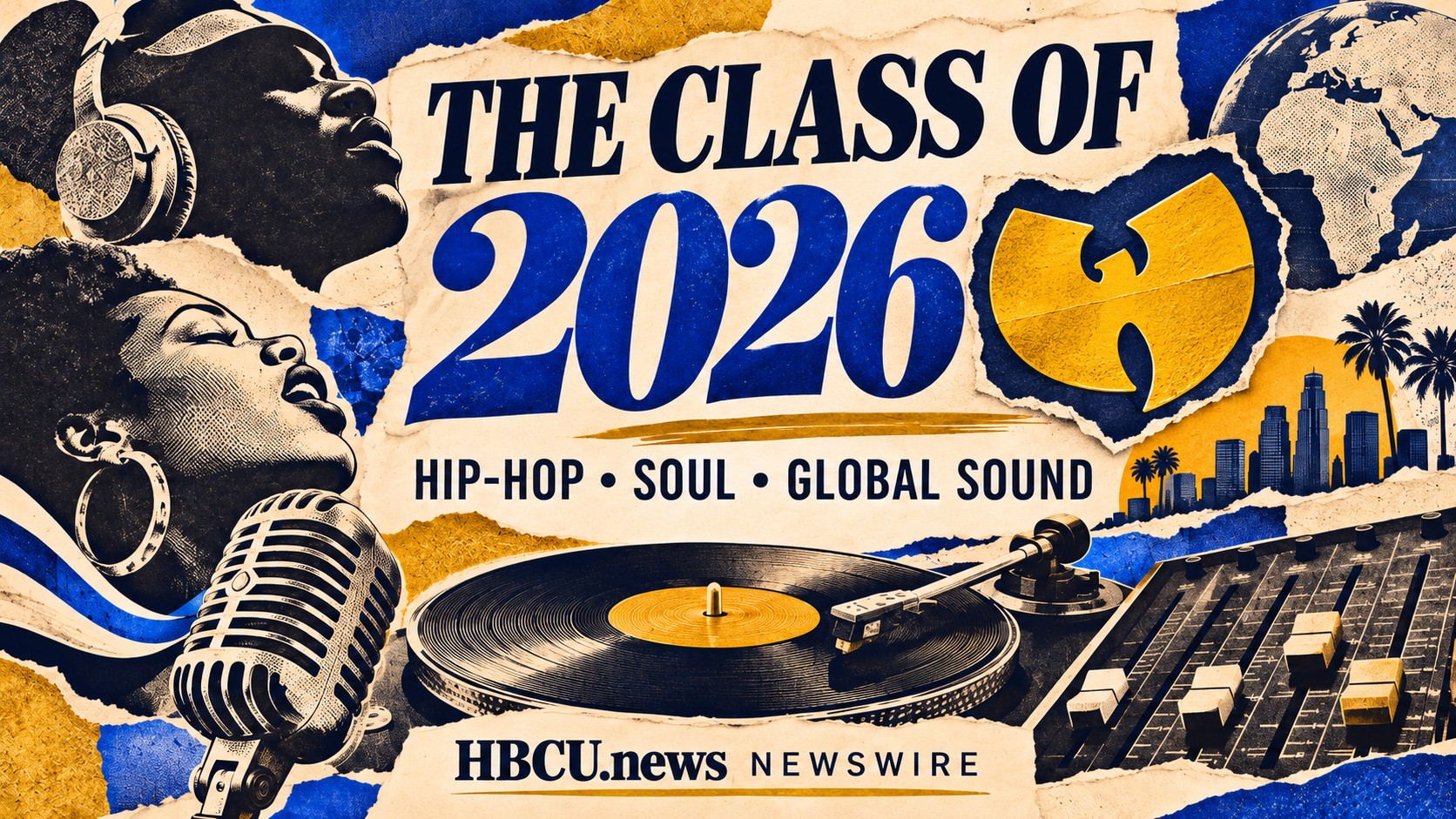
The Rock & Roll Hall of Fame's Class of 2026 brings Wu-Tang Clan, Sade and the late Luther Vandross into the spotlight this Saturday, November 14, in Los Angeles. The inductees span hip-hop, soul, R&B and several generations of influential music.
Other performer inductees include Phil Collins, Billy Idol, Iron Maiden, Oasis and Joy Division/New Order. The Hall will also honor Queen Latifah, MC Lyte, Fela Kuti, Celia Cruz and Gram Parsons with its Early Influence Award. The ceremony is scheduled for the Peacock Theater, with an edited program set to air on ABC and Disney+ in December.
For HBCU students studying music, media, business and cultural history, the announcement is more than a list of famous names. These artists' careers provide documented examples of how creative identity, collaborations, recording agreements and cultural preservation work across different stages of the entertainment industry.
Wu-Tang Clan's 1993 debut, Enter the Wu-Tang (36 Chambers), introduced a collective identity built around sharply individual voices and a distinctive production approach. The Staten Island group also found an unusual business model: its members pursued separate solo recording deals while maintaining a shared group identity. The Hall cites that arrangement as part of the collective's influence.
That history raises practical questions for student creators. What happens when artists develop a shared brand but negotiate individual contracts? How do songwriting, recording ownership and distribution agreements affect their futures? Wu-Tang's trajectory is a useful case study, not a one-size-fits-all formula.
Queen Latifah and MC Lyte will receive Early Influence honors. MC Lyte's 1988 album Lyte as a Rock was the first full-length solo album by a female rapper, according to the Hall. Queen Latifah's 1989 debut All Hail the Queen preceded work in television, film and production. Their careers show different ways artists have expanded opportunities across media.
Luther Vandross, who died in 2005, built a career as a singer, songwriter, arranger and producer. Sade is the British band fronted by Sade Adu, rather than a solo act. Fela Kuti and Celia Cruz bring the stories of Nigerian and Cuban music into an induction class whose cultural reach extends well beyond the United States.
The Associated Press reported on November 10 that Sade Adu would not attend the ceremony. Oasis, Iron Maiden and some members of New Order were also expected to be absent; other performance plans remained uncertain. The induction is not scheduled for a live television broadcast.
For HBCU journalism and entertainment programs, the event opens up reporting and classroom opportunities: comparing music-business agreements, documenting production credits, examining award categories and asking how music institutions recognize innovation. Students can also examine whose contributions gain recognition, and when.
The Hall's ceremony celebrates completed careers and ongoing influence. For readers building creative futures now, the useful story is not simply who receives an honor but what those careers reveal about how music, business and culture change together.
Why this matters: For HBCU students studying music, media, business and cultural history, the announcement is more than a list of famous names. These artists' careers provide documented examples of how creative identity, collaborations, recording agreements and cultural preservation work across different stages of the entertainment industry.